Increase Investments to Keep our Communities Safe
Safety is about more than policing—it’s about opportunity, preparedness, and care. By investing in education, climate resilience, and good local jobs, we can build communities where people feel secure today and confident about tomorrow.
The Solutions
Education
Teachers Deserve More
In New York City, a new teacher earns about $66,733 with a bachelor’s degree, or $75,017 with a master’s. Outside the City, starting salaries are often far lower. That’s not right. In the State budget process, I will fight to increase annual school funding so that every teacher, in every community, starts with a true living wage.
Teachers shape our kids, our neighborhoods, and our future and if we want strong, safe communities, we must pay educators the respect they’ve earned.
A Statewide School Supply Program
No teacher should ever have to reach into their own pocket to stock their classroom. As your State Senator, I will introduce legislation requiring the State Department of Education to create a statewide school supply program so educators can order the materials their students need at no cost, fully funded by the State. Teaching is public service, and New York should treat it that way.
Money Should Follow the Students
Right now, if a student transfers schools after a certain point in the year, the funding meant to educate that child stays behind instead of following them. That hurts students and leaves receiving schools scrambling to provide the support kids need. Too often, this impacts students with disabilities who transfer midyear into public schools that were never given the resources to serve them properly.
I will change the law so that no matter when a student moves, the funding allocated for that student moves with them, ensuring fairness, transparency, and real accountability in our education system.
Free CUNY — Again
CUNY schools are some of the best in New York and they used to be tuition-free. For decades, CUNY opened the door to higher education for working-class New Yorkers, immigrants, and first-generation college students. There’s no reason we can’t do that again. I will fight to make CUNY free, so every New Yorker can pursue an education and a better future without being buried in student debt.
And we shouldn’t stop there: our long-term goal must be tuition-free SUNY schools for New York residents, because education is a public good, not a privilege reserved for those who can afford it.
Build More Schools
Overcrowded classrooms have been the norm in our district for far too long. Meanwhile, we have roughly 1,000 vacant lots sitting unused. That’s unacceptable. We should be building new elementary, middle, and high schools to relieve overcrowding and give students the space and attention they deserve. This must include more specialized high schools, so more young people have a real chance to attend them.
As your State Senator, I will work with City Council members and City and State agencies to identify appropriate sites and move new school construction forward because investing in our schools means investing in safer, stronger communities.
Strong Job Training and Apprenticeships
College should be affordable and accessible for everyone who wants to go but it’s not the only path to a good life. New York also needs strong trade and apprenticeship programs. Right now, New York City faces a serious shortage of licensed plumbers and electricians, and demand will only grow as we invest in infrastructure and move toward renewable energy.
I will work with labor unions and the State to expand outreach, training, and apprenticeship programs that connect people to these good-paying, union jobs. building a skilled workforce while strengthening our communities.
Environment
Better Land Use
New York wastes too much usable space and families pay the price in higher energy bills and less resilient communities. We should be putting that land to work. Rooftops, parking lots, highways, and transit corridors can all be used to generate clean, affordable solar power that lowers monthly costs for working people. I will work with industry leaders and my colleagues in the Legislature to expand proven solutions like solar canopies over parking lots and smart solar installations along railways and highways.
Investing this way makes our communities safer by reducing blackout risks, lowering household energy costs, and strengthening local infrastructure in the face of extreme heat, storms, and winter weather. Other states are already doing this. New York has the land, the technology, and the workforce, we just need the political will to invest in safety through smart, forward-looking infrastructure.
Dedicated Capital Funding for the NYC Dept. of Environmental Protection
Right now, the Department of Environmental Protection is forced to rely almost entirely on water and sewer bills to pay for critical infrastructure, like stormwater upgrades that protect homes and neighborhoods. That funding model doesn’t work. It leaves massive gaps, slows down urgent projects, and puts people at risk. When upgrades are delayed, flooding and sewer backups become more frequent, and in the worst cases, families lose their homes or even their lives.
DEP is facing roughly a $20 billion shortfall in necessary infrastructure funding. I will fight to secure a dedicated state capital funding stream so these life-saving upgrades can happen faster. Investing up front will reduce flooding, prevent sewer overflows during major storms, and make our communities safer and more resilient. It will also keep DEP from passing costs onto ratepayers saving New Yorkers money in the long run while protecting public safety.
Data Centers Should Generate Their Own Clean Energy
Across the country, massive data centers are being built to meet the booming demand for cloud services and artificial intelligence but that growth comes with real costs. These facilities consume huge amounts of electricity around the clock, putting strain on the grid and contributing to rising energy prices for families and small businesses. When there’s less available supply, electricity rates go up, which hits working-class households the hardest and makes our communities less resilient and less safe in the face of extreme weather and grid stress.
Some states are already acting. In New Jersey, lawmakers have advanced bills that would require data centers to derive all their power from new clean energy sources, including verifiable renewable or zero-emission generation, and to submit detailed energy usage plans as part of the development process. These proposals are intended to protect ratepayers and keep energy demand from jeopardizing grid reliability and affordability.
I will introduce legislation in New York that requires any new data center built here to produce all, if not most, of its own energy on site, using renewable sources only. That means solar, storage, and other clean generation tied directly to the facility, not fossil fuels or grid power that pushes costs onto everyone else. This policy will help protect New Yorkers from rising electricity bills, strengthen our grid, and ensure that investment in technology doesn’t come at the expense of community safety and affordability.
Lower the Noise
For years, families living under the flight paths near LaGuardia Airport have dealt with constant noise pollution that disrupts sleep, harms physical and mental health, and makes homes less safe and livable. That’s not just an inconvenience, it’s a public health issue.
The Port Authority of New York and New Jersey was previously granted approval by the Federal Aviation Administration to install noise-reduction improvements in the homes most affected by airport noise, but that program has stalled. I will investigate why and work to ensure that every eligible household receives the upgrades they were promised.
In addition, the FAA rejected a prior Port Authority study on implementing aircraft noise-abatement procedures for arriving and departing flights. I will work with the Port Authority, New York’s congressional representatives, and the FAA to make sure the study is strengthened and resubmitted so we can finally secure approval to reduce unnecessary noise at its source. Investing in quieter skies means healthier families, safer neighborhoods, and communities that can finally rest.
Phasing In Sustainable Aviation Fuel
Climate safety is community safety and that includes the air we breathe. Aviation is responsible for about 2% of global carbon dioxide emissions and a significant share of transportation-related pollution. Sustainable Aviation Fuel (SAF) offers a real solution. Compared to conventional jet fuel, SAF can reduce greenhouse gas emissions by up to 94%, depending on how it’s produced. That means cleaner air, fewer toxic emissions, and better health outcomes, especially for families living near airports and under flight paths.
I will require the Port Authority and other relevant agencies to produce a clear, enforceable implementation plan to transition regional airports to Sustainable Aviation Fuel. Based on that guidance, I will push to set a firm deadline for when every aircraft departing New York must use SAF. This is how we protect public health, reduce climate risk, and invest in safer communities for the long term.
Public Safety
Tackling Public Safety at Its Roots
Real public safety doesn’t start with punishment, it starts with prevention, treatment, and opportunity. When we invest in people early and address the root causes of harm, communities are safer, families are stronger, and cycles of incarceration are broken. I will co-sponsor the following bills on day 1.
Youth Justice and Opportunities Act (S4330).
Young people make mistakes but those mistakes should not define their entire future. The Youth Justice and Opportunities Act expands alternatives to incarceration, diversion programs, and immediate record sealing for young people who are arrested in New York. Instead of saddling kids with lifelong barriers to education and employment, this bill prioritizes age-appropriate interventions that move young people out of the criminal legal system and into school, stability, and real opportunity. That’s how we prevent crime before it starts.
Treatment Court Expansion Act (S4547).
Too often, our system responds to mental health and substance use issues with incarceration instead of care. The Treatment Court Expansion Act gives courts the tools and resources to address the root causes of harm by expanding access to mental health and substance use treatment courts. These courts work: people who go through treatment courts have up to 50% lower rearrest rates than those sent to prison. Expanding this model means people return to their communities healthier, more stable, and far less likely to reoffend. Passage of this bill will be one of my top public safety priorities.
Mental Illness Training Course (S5505).
Public safety also means recognizing when someone needs help, before a crisis turns into homelessness or incarceration. According to the New York State Comptroller, between 2018 and 2022, 26% of people diagnosed with a serious mental illness were not placed in a mental health shelter, and nearly half of those with substance or alcohol use disorders were not placed in appropriate treatment settings. This bill expands mental health and substance use training requirements so more professionals can identify people in need and connect them to care. Expanding preventative services reduces homelessness, lowers crime, and saves lives.
Mobile Crisis Teams (S5978).
When someone is experiencing a mental health or substance use crisis, sending the right help matters. This bill strengthens New York’s mobile crisis teams by requiring that they always include at least one behavioral health professional, alongside trained peer and family advocates. These teams can de-escalate crises, connect people to services, and prevent situations from becoming criminal or violent. This is compassionate, effective public safety and it works.
New York For All (S2235) & the Slate of Immigration Bills
At a time when national leaders are threatening mass deportations and policies that would tear families apart, New York must stand firm in protecting our neighbors. Our communities are safer when everyone feels secure enough to go to work, send their kids to school, seek medical care, and report crimes without fear. That’s why I will co-sponsor the New York for All Act on day one.
This legislation prevents state and local resources from being used to carry out a cruel and harmful federal deportation agenda while keeping the focus of local law enforcement on public safety, not immigration enforcement. Nothing in this act prevents federal immigration authorities from doing their job or from arresting people who commit crimes. It simply ensures that New York does not waste resources undermining trust, destabilizing families, or making our communities less safe. Public safety depends on dignity, trust, and inclusion—and New York should lead by example.
I will co-sponsor and champion this bill immediately along with the BUILD, MELT, and RADAR Acts, all of which will go a long way in ensuring we fully protect our immigrant communities.
Statewide Right to Counsel (S6772)
No one should lose their home simply because they couldn’t afford a lawyer. The Statewide Right to Counsel bill would guarantee legal representation to every New Yorker facing eviction.
Keeping people housed is one of the most effective ways to keep communities safe. When families are pushed into homelessness, the ripple effects harm children, strain shelters, and destabilize entire neighborhoods. Expanding the right to counsel statewide is a smart, humane investment that prevents unnecessary evictions, saves taxpayer money, and protects the stability and safety of our communities.
This is another bill I look forward to championing on day 1.
Expand Prohibited Ammunition Protections
Certain types of ammunition that are designed to inflict especially severe damage, such as armor-piercing rounds and exploding projectiles are already prohibited in New York because they pose unacceptable risks to public safety. Hollow-point ammunition, which is engineered to expand on impact and can cause more extensive injury than conventional rounds, is a type of bullet that has been scrutinized nationally for its lethality. While hollow points are currently legal in most places and not explicitly banned under existing New York statutes, research and safety advocates have long noted that ammunition types capable of causing greater harm should be regulated more strictly to prevent needless injury and death.
I will introduce legislation to expand the list of prohibited ammunition types to include hollow-point and other high-lethality rounds; with appropriate carve-outs for legitimate uses such as law enforcement, licensed hunters, and certified ranges, to reduce the likelihood that excessively dangerous ammunition contributes to shootings and community trauma. Stronger ammunition standards will help keep weapons out of the hands of those most likely to misuse them and make our streets, schools, and neighborhoods safer for everyone.
Fair Pay, Smarter Staffing for Police
Public safety depends on having enough trained officers on the job and using taxpayer dollars wisely. Right now, New York City relies far too heavily on overtime because we struggle to recruit and retain officers. That costs taxpayers millions every year and leads to burnout that makes both officers and communities less safe.
I support increasing the starting salary for officers in the New York City Police Department so we can attract and retain qualified candidates, reduce excessive overtime costs, and build a more stable, professional force. Paying officers fairly up front saves money in the long run and helps ensure that those tasked with public safety can do their jobs effectively, responsibly, and with accountability.
This isn’t about blank checks it’s about smart investment, safer staffing levels, and fiscal responsibility.
Pay Parity for EMS Professionals
No one should save lives for poverty wages. Emergency Medical Services professionals are often the first to arrive in a crisis responding to overdoses, cardiac arrests, car accidents, and mental health emergencies, yet they are among the most underpaid workers in our public safety system.
We must ensure pay parity for EMS professionals, including those serving through the FDNY EMS, so compensation reflects the skill, risk, and responsibility their jobs require. Fair pay improves retention, reduces response times, and ensures that when New Yorkers call for help, trained professionals are there to answer. Supporting EMS is a public safety issue, a workforce issue, and a moral issue.
Everything Else
End Corporate Money in Our Elections
Our democracy should be decided by voters not corporations with unlimited money. Corporations only have the powers the state gives them, and New York has the authority to take those powers back. I will introduce legislation to amend New York’s corporate law so that corporations are no longer allowed to spend money influencing our elections. This approach doesn’t require overturning federal court decisions, it uses New York’s existing authority to protect our democracy at the source. Elections should reflect the will of the people, not the interests of corporate donors.
Read more about this from the Center for American Progress.
End Government-Family Profiteering
New Yorkers deserve a government that works for the public not for insiders and their relatives. Too often, close family members of elected officials benefit from jobs, contracts, or lobbying work tied to their family’s position in government. Even when technically legal, these arrangements create a clear appearance of impropriety and fuel public distrust.
I will introduce legislation that prohibits close family members and the lobbying firms they work for from lobbying or doing business with the related elected official or high-ranking government employee. Ethical government requires clear lines, real accountability, and rules that put the public interest first.
More Cultural Spaces for Our Community
Our district has a rich artistic history, but too few accessible places for music, art, and performance. Outside of school buildings, which are often unavailable for community use, there are virtually no local venues where young people and families can create, rehearse, or experience the arts. That’s a missed opportunity.
Arts and music programs help young people build confidence, creativity, and critical thinking skills, while also providing healthy outlets for self-expression and connection. I will work with the community to identify underused spaces and help transform them into vibrant art, music, and theater venues. These spaces will give our kids safe, positive places to express themselves, support local artists, boost nearby small businesses through increased foot traffic, and save families from having to travel to Brooklyn or Manhattan just to participate in the arts.
New York City Arts Space Act (S1077)
To further facilitate this goal, I will also proudly co-sponsor the New York City Arts Space Act. This bill would provide tax incentives to encourage the creation of affordable studios, rehearsal spaces, performance venues, and cultural programming in buildings converted from commercial to residential use. It sets reasonable rent caps and long-term affordability requirements so nonprofit arts organizations can thrive and serve the public without being priced out.
Supporting a Business Improvement District for Whitestone
I will work to support the creation of a Business Improvement District (BID) in Whitestone so local businesses have the tools they need to thrive and our commercial corridors can be cleaner, safer, and more vibrant.
A BID allows local business and property owners to invest directly in services like street cleaning, beautification, marketing, and small-business support on top of what the city already provides. It’s a proven, community-driven way to strengthen neighborhood shopping districts while keeping local voices in charge.
As a state legislator, I will:
Advocate for state policies and resources that support BID formation and protect small businesses
Partner with local stakeholders and city agencies to help navigate the BID planning and approval process
Push for funding and technical assistance so small businesses can participate fully and equitably
By supporting a Whitestone BID, we can strengthen local businesses, create a more welcoming neighborhood, and ensure economic development works for the people who already call this community home.
Expand Public Transit
New York City used to build 5-10 new subway stations every year. But since 1990, only 4 new stations have been built — that’s 4 stations in 36 years.
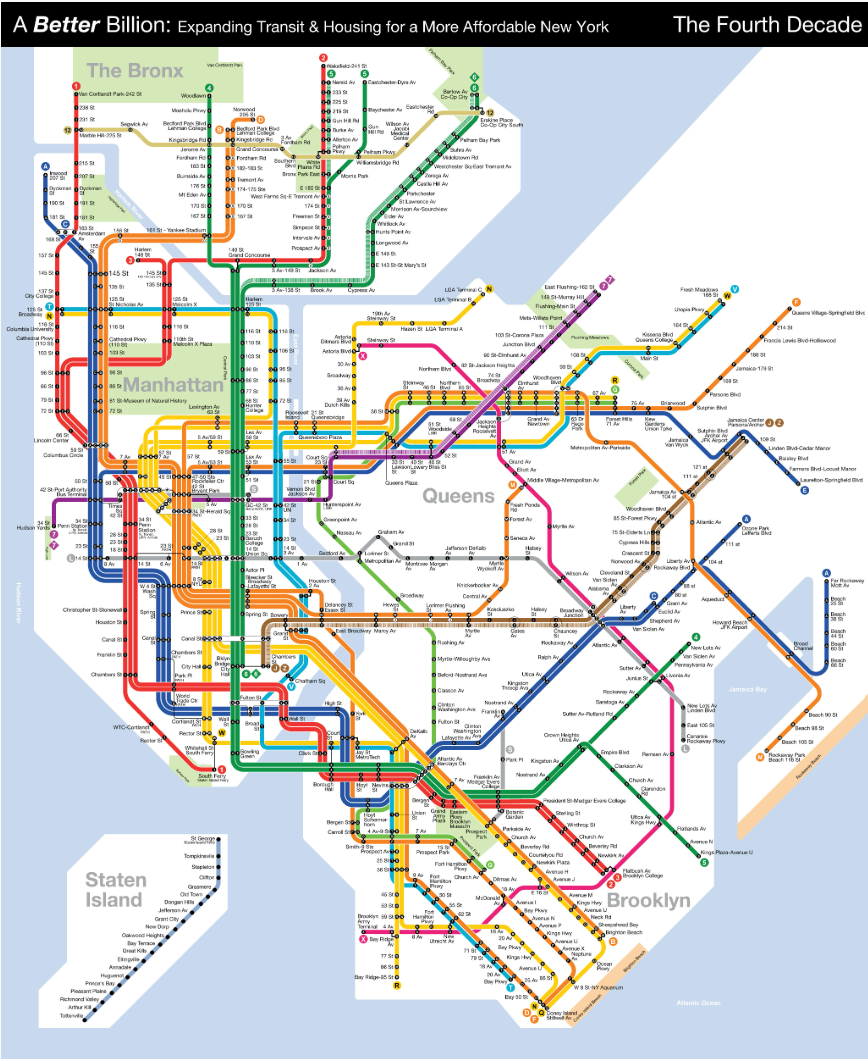
For example, I bet you did not know that Hillside Avenue is as wide as it is because there were plans to one day extend the F train from 179th Street to Little Neck Parkway? If the MTA can expand the 2nd avenue subway, then we can extend the F line too. Extending the F all the way down Hillside Avenue will relieve the overcrowding on the local buses like the Q43 and allow people to get to home or work much faster. Extending the line would also likely bring more economic development to Hillside and the surrounding areas. I will work with the MTA and local community to make this extension, and many others, a reality. See the image below from NYU Marron’s Transit Costs Project on how the subway could look if we put the political willpower behind the idea.
Right now, it costs far too much money to build new subway tunnels and stations, for a variety of reason; one example is that the MTA lacks a standard blueprint for stations, meaning every time a new station is planned, the MTA has to pay for a brand new design. The way the MTA contracts projects also often leads to delays because contractors earn more money from endlessly renegotiating contracts as work progresses. There is a lot we can learn from how cities like Paris and Madrid are able to build far more subway extensions than us at a significantly lower price point. I will bring in outside expertise to help draft new laws that will force the MTA to adopt these new practices, reducing costs and inefficiencies.
I will also work with the MTA on how we can improve interconnect ability between busses, the LIRR and Subway throughout the district, as well as improving North/South buses routes. For example, from where I live in Floral Park, the only bus that connects to a LIRR station comes so infrequently I have only seen it a handful of times in 27 years. I believe that if you improve reliability, people will use public transit more. Another example is that a 15 minute drive by car to Bay Terrace would take over an hour by bus. We can do better.
Lastly, we need to improve programs like Access-A-Ride for our seniors and disabled peoples so that they always have a reliable transportation option when they need it to get to and from doctors, stores, family and everything else.
I will work to secure funding for these initiatives in the state budget.